
Summary
Driving through the desert, Nish stops at a shuttered gas station to charge her car. Waiting for the 3-hour charge, she visits the nearby Black Museum, which is full of strange exhibits of murder, violence, and other gruesome oddities. There are no other visitors since she got there before tours began, so it’s just Nish and proprietor Rolo Haynes.
First, Rolo shows her an exhibit featuring a neural implant that was put in Dr. Peter Dawson’s brain so he could feel patients’ pain while they wear a transmitter device on their head. This allowed the doctor to diagnose anything without suffering physical damage. Unfortunately, Dr. Dawson got addicted to the painful sensations — even getting sexual stimulation from it, so while suspended from duty at the hospital, he mutilated himself and then killed someone to fulfill his desire to feel extreme pain and terror. Dr. Dawson wound up sedated in a mental institution. We also learn that most of Rolo’s exhibits come from his stint as a tech researcher/scientist at a hospital and another firm.
Next, Rolo shows her a stuffed monkey exhibit and gives the context. It started with Jack having his braindead wife Carrie’s consciousness downloaded into his own, allowing him to hear his euthanized wife speaking and allowing her to see and feel what he does, especially their young son Parker. Again, the technology was implemented as part of Rolo’s experimental work at the hospital. But Carrie’s constant presence/voice/bickering in Jack’s head drove him crazy and became worse when he looked at other women. So first, Rolo let him pause Carrie’s presence. But when Jack started dating another woman, pausing Carrie wasn’t enough, so they transferred her consciousness into the stuffed bear, allowing her to still see, feel, and communicate that she loves or needs to hug Parker. The stuffed monkey resides in the museum with Carrie’s consciousness still in it.
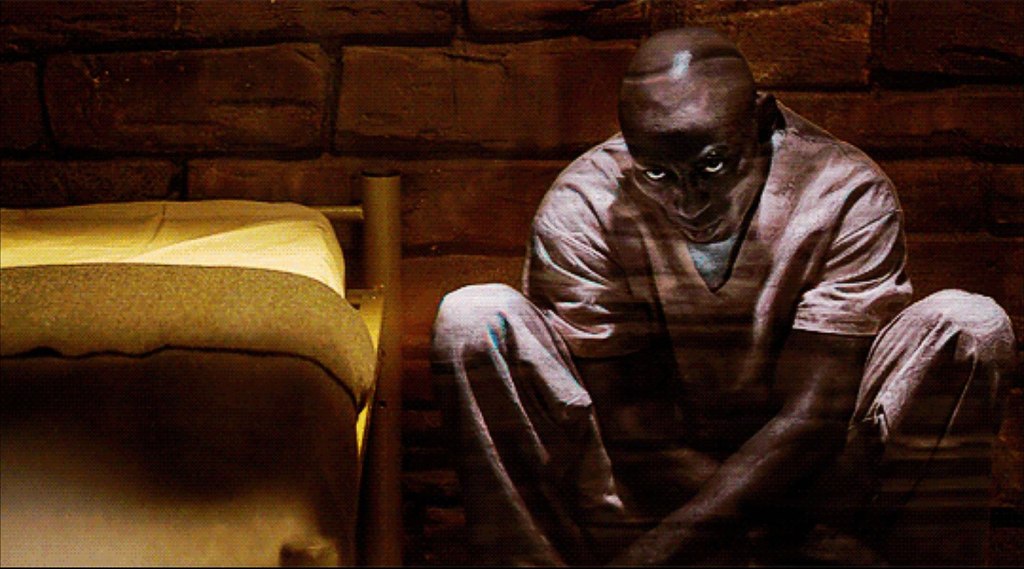
Finally, Rolo shows her the feature exhibit of convicted murderer Clayton, whose consciousness is represented via hologram. Rolo uploaded Clayton’s consciousness after he was executed and downloaded him into a hologram exhibit that patrons could “execute” again and again on the electric chair, gleefully watching him suffer while stopping just short of killing him. However, it turns out Clayton is Nish’s father, and her visit to the Black Museum did not happen by chance. She is there for revenge. Nish had poisoned Rolo with a bottle of water she gave him earlier. After Rolo dies, Nish uploads his consciousness, downloads it into hologram Clayton’s consciousness, and executes her father with Rolo inside, painfully killing both but setting her father free from hologram hell to the delight of her mother, whose consciousness lives in her.
Something disturbing: The exhibit featuring hologram Clayton.
Something entertaining: The Arkangel tablet being in the museum.
Overall Reaction to the Episode
Disturbed. This episode made me more uncomfortable than any I’ve seen. Watching people suffer — physically, mentally, and emotionally — is not enjoyable, even in a fictional script. I felt anxious watching Clayton and Carrie in their miserable captivities.
Most Relatable to our Societal Condition Today
This episode was the hardest for me to align with something in today’s society. But I’ll go with Clayton being executed and then his digital consciousness being tortured as relating to the disproportionate number of Black men incarcerated and executed in the United States. I got a sense the director was trying to illustrate this with the repeated tormenting of Clayton.
Element Connected With This Week’s Assigned Readings
The connection I was most drawn to this week is with Orth’s TechnoSupremecy and the Final Frontier: Other Minds. On Page 221, she writes, “The potential negative physical consequences of these sci-fi devices, including the clogging of arteries and the spread of disease, are, as is usual in TechnoSupremecy, ignored.” This is exactly what Rolo Haynes did. He used patients, employees, and prisoners as guinea pigs for his technologies without considering the horrible effects or ethical dilemmas they might cause, and then he profited from their suffering by making them spectacles in his museum.
Discussion Question
Orth writes, “People want brain implants!” And at the end of Chapter 10, she states she would get one “in a heartbeat.” Would you be willing to get a brain implant if it would give you advanced functioning that would help you excel in your career — ala Dr. Dawson in Black Museum? A voluntary, elective implant; not one you get compensated for as part of a trial or experiment.
 Stephen S. Shahan
Leave a comment