
Summary
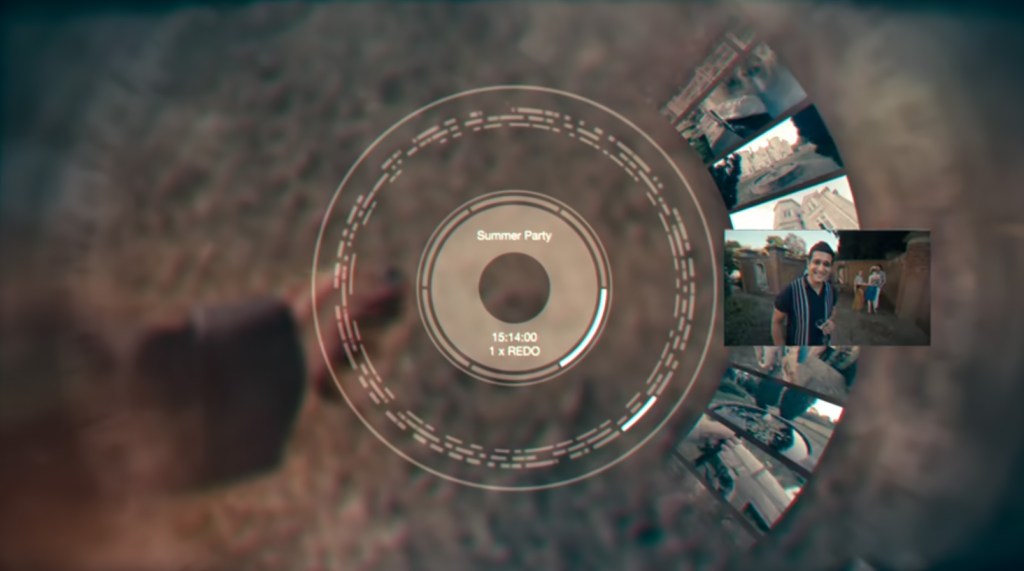
An implantable technology, the Willow Grain, is prevalent in society. The rice grain-sized device, implanted behind the ear, records audio and video of users’ interactions from a first-person perspective. Recordings can be mirrored to screens for playback, or users can view them inside their eyes. Users control playback with a thumb-sized remote.
Grain’s recordings allow for granular analysis of users’ interactions. The main character, Liam, constantly replays and analyzes his. Following a dinner party, a drunk Liam plays his recorded observations for his wife, Ffion, making her account for a previous relationship with dinner guest Jonas. Liam then drives to Jonas’s house, assaults him, and forces him to delete all memories of Ffion. But Liam’s suspicions are confirmed by his recording of Jonas deleting the memories, which show the adulterers in bed together. Liam forces Ffion to play back the affair on screen — memories she hadn’t deleted. The episode ends with a tortured Liam removing his Grain.
Something disturbing: The sad scene involving Liam and Ffion having sex while both playing in their eyes previous episodes of more-passionate sex. Complete with unhuman, grayed-out eyes.
Something entertaining: Grain detecting Liam’s intoxication made the technology seem justifiable in some way.
Overall Reaction to the Episode
Positive. This episode provokes a common fear of future implantable devices that I’ve heard from friends, family, and media personalities. The Grain technology is presented in a smart and compelling way that portrays the technology as useful, entertaining, depressing, and terrifying.
Most Relatable to our Societal Condition Today
Our incessant recording and viewing of life’s moments — both trivial and compelling — on mobile devices (and cameras everywhere) and screens, and our posting of them online for others to view.
Element Connected With This Week’s Assigned Readings
Pedersen discusses in Will the Body Become a Platform (39) an implantable technology championed by Elon Musk’s company, Neuralink, that can be implanted in the brain “for the uploading and downloading of thoughts to a computer.” This is not quite as advanced as Willow Grain, but it’s pretty astonishing that something similar is already being developed.
Discussion Question
If Willow Grain were available in real life — or something similar through Neuralink or another company — should it only be used to improve the quality of life for those with neurological medical conditions/diseases, or should anyone be able to elect to get the implant for recreational or enhancement purposes?
 Stephen S. Shahan
Leave a comment